



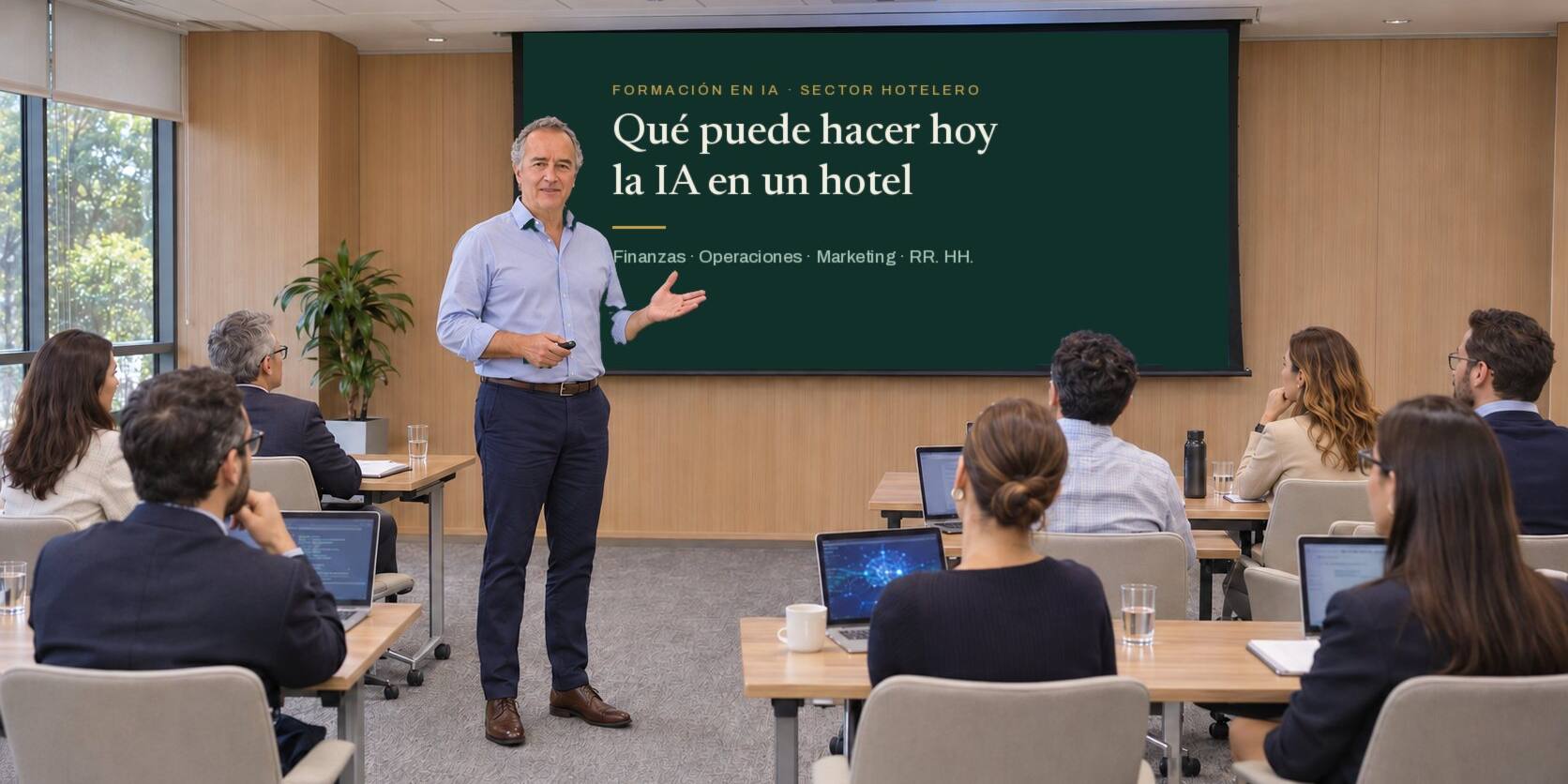
What if the main obstacle to using artificial intelligence in a hotel were not the technology, but the fact that nobody on the team has had time to sit down and try it with their own work?
We have already trained teams from hotel and hospitality companies in AI: management, finance, operations, marketing and human resources, each with their own day-to-day and very little room to learn something new between one season and the next. What follows is not a list of promises, but what we have seen work when AI is applied to specific hotel tasks, and also what it is better not to ask of it.
Finance: each hotel’s P&L without fighting the spreadsheet
In a group with several hotels, the finance team spends many hours on work that does not lead to any decision: consolidating data, preparing the monthly report, explaining why one property has drifted from budget. AI does not replace that analysis, but it shortens the road to it considerably. Starting from each hotel’s profit and loss account, it can be asked to flag the items with the largest deviations, suggest a first explanation and draft the commentary for the board, which the person in charge then reviews and corrects.
The same goes for budgets. Given the history of occupancy, average rate and costs over recent years, it prepares a first scenario and several alternatives in minutes. The judgement still belongs to the finance director; what changes is that he or she arrives at the meeting with the mechanical work already done.
Operations: procedures, shifts and communication in several languages
In operations, the biggest saving lies in the documents everyone needs and nobody has time to write: room-cleaning procedures, checklists for the start of the season, incident protocols. AI drafts them from the manager’s instructions, adapts them to each property and translates them for staff who do not speak Spanish.
It is also useful in guest communication: replies to reviews on Google or Booking in the guest’s language and in the hotel’s tone, pre-arrival emails, practical information about the area. The rule here is simple: AI proposes and a person from the hotel signs. A reply to a negative review is never published without someone reading it first.
Marketing: own content without always depending on an agency
A boutique hotel lives on telling its story well. Copy for the website and booking-platform listings, social media posts, descriptions of rooms and experiences, campaigns for specific dates. With a good brief, AI produces solid drafts that the marketing team adjusts, freeing time for what really requires judgement: deciding what to say and to whom.
In images and video, progress over the last year has been remarkable. Simple pieces for social media can already be prepared, and the hotel’s own photos can be improved. That said, I would not recommend inventing rooms, views or dishes that do not exist: a guest who arrives and does not find what was in the photo is a guaranteed bad review.
Human resources: onboarding staff in the middle of the season
The sector lives on hiring peaks, and every new hire means explaining the same things again and again. With AI it takes little time to put together a welcome manual for each position, write clearer job offers (housekeeping, front desk, kitchen), prepare interview questions and answer new staff’s frequent questions without the manager having to be available all the time.
What it is better not to ask of it
There are three limits I repeat in every training. The first is guests’ personal data: it should not be entered into general-purpose tools without a proper configuration and a data-protection review. The second is figures: AI can get a number wrong, so everything that goes into a report is checked against its source. The third is judgement: AI does not know the regular guest, the history of the house or why a hotel charges what it charges. That still requires the team.
How to get started in a hotel
Experience tells me that generic training is of little use in this sector. What works best is combining a few common sessions, so that the whole management team understands what to expect from AI and the rules for using it, with workshops by area and at each property, working on their own documents: their P&L, their reviews, their procedures. When the operations manager sees his or her own protocol drafted and translated in ten minutes, there is nothing left to convince.
One detail many Spanish companies are unaware of: this kind of training can be subsidised through Fundae using the training credit the company already has, so the real cost can be very low.
Tourism weighs too much in Andalusia for hotels to stay on the sidelines. The question is not whether AI will reach hotel management, but who will make the most of it first.
If you would like to see what AI could do in your hotel, write to me through the contact page and we will look at it using your own cases.


